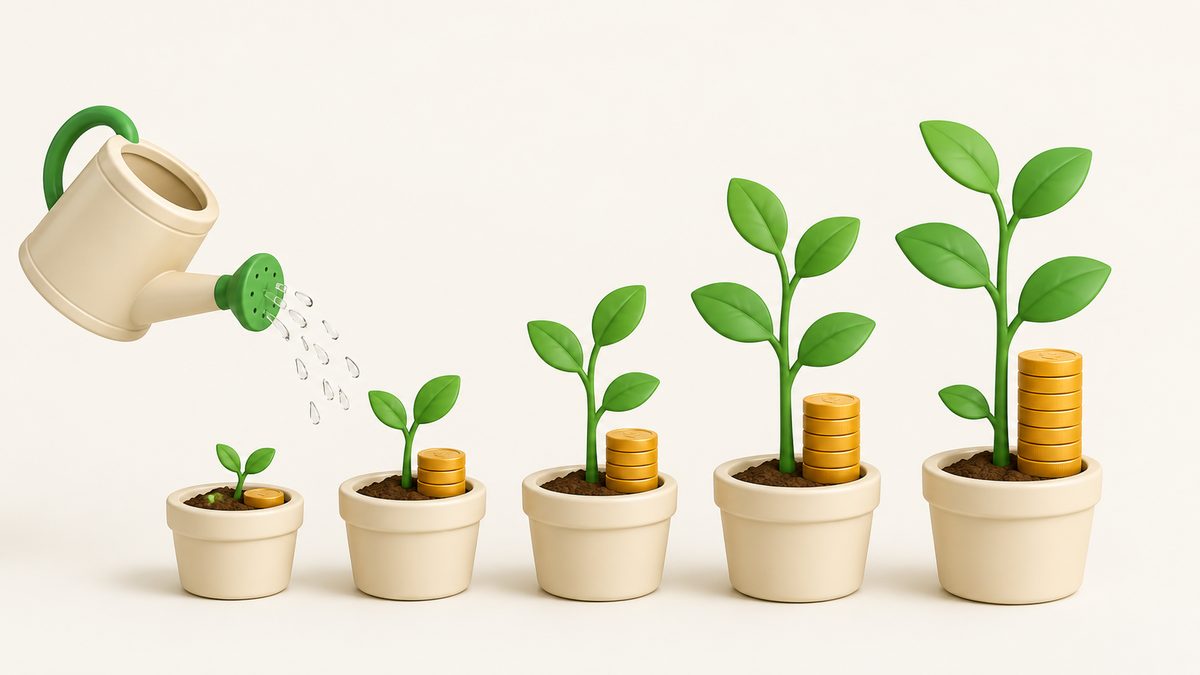
If you have ₹1 lakh to invest, the right home for it depends on one question: when will you need it back? Match the money to the timeline, and the choice gets easy.
If you'll need it within 1–3 years
Keep it safe and liquid — a high-rate savings account, a fixed deposit, or a short-term debt fund. You won't grow it much, but you won't risk a loss right before you need it. A 7% FD turns ₹1 lakh into about ₹1.07 lakh in a year (before tax).
If you have 5+ years
This is where equity earns its keep. Through an index fund or a diversified mutual fund, ₹1 lakh at a 12% assumed return becomes roughly ₹1.76 lakh in 5 years and about ₹3.1 lakh in 10 — far ahead of an FD, though with ups and downs along the way.
Lump sum or stagger it?
If markets feel stretched or you're nervous, you can spread the ₹1 lakh over a few months (an STP) instead of investing it all at once. Historically a lump sum invested longer often wins, but staggering removes the stress of timing.
Run ₹1 lakh through the lumpsum and FD calculators for your own horizon and expected return.
Where to go next
FAQs
For money you'll need within 1–3 years, prioritise safety and access: a high-rate savings account, a fixed deposit, or a short-term/liquid debt fund. Avoid equity for short horizons — it can be down exactly when you need the money.
Over long periods (5+ years), equity mutual funds or index funds have historically delivered the highest returns, though with volatility. For the short term, FDs are safer but lower. There's no risk-free high return.
Educational information, not financial advice. Figures are illustrative and assume the stated return or rate; actual outcomes vary and aren't guaranteed. Run your own numbers before deciding.