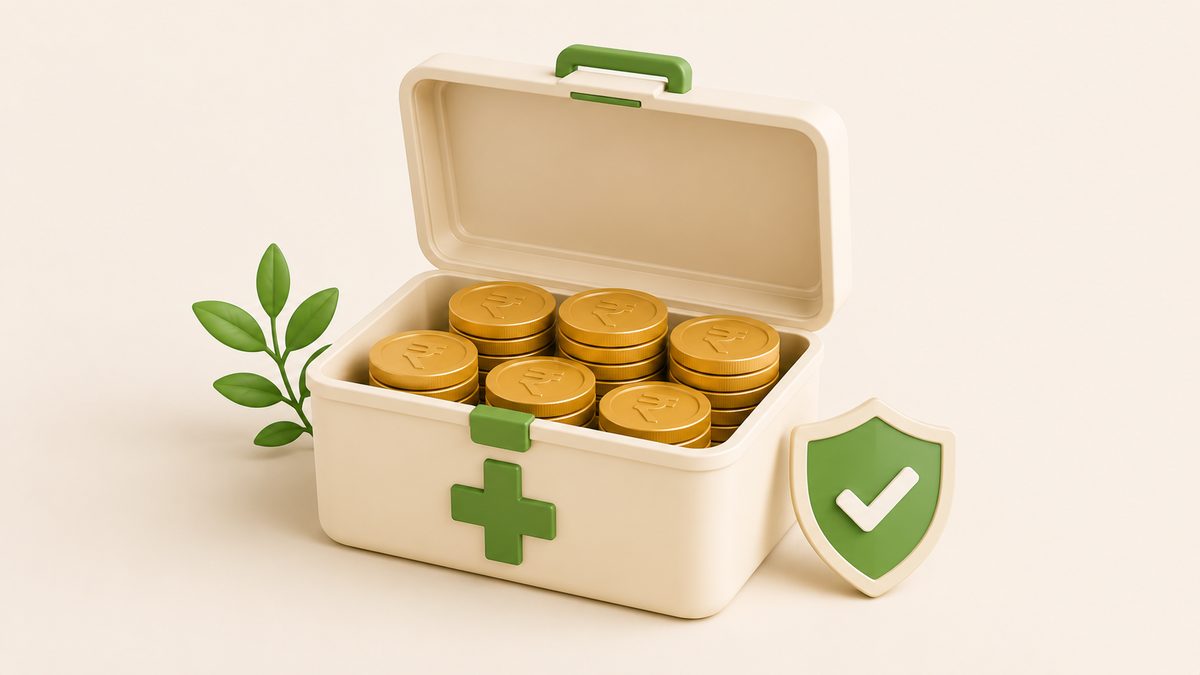
Before SIPs, before tax-saving, before anything — build an emergency fund. It's the buffer that stops a job loss or medical bill from forcing you to sell investments or take a high-interest loan at the worst possible time.
How much?
A common target is 3–6 months of essential expenses — rent, EMIs, groceries, utilities, insurance. If your income is variable or you're the sole earner, lean toward 6–12 months. Base it on essential spending, not your full lifestyle.
Where to keep it
- A separate savings account — instant access (some pay 6%+ on higher balances)
- A sweep-in / flexi FD — earns FD-like interest but auto-liquidates when you withdraw
- A short-term or liquid fund — slightly higher yield, a day or two to redeem
The rule for emergency money is access first, return second. Don't lock it in long FDs or put it in equity — you need it available the day you need it, without a loss.
Once your buffer is full, you can invest the rest with real peace of mind.
Where to go next
FAQs
Typically 3–6 months of essential expenses, or 6–12 months if your income is irregular or you're the only earner. Count only must-pay costs like rent, EMIs, food, utilities and insurance.
A sweep-in or flexi FD works well — it earns FD-like interest but converts back to cash automatically when you withdraw. Avoid long, locked FDs and avoid equity for this money; you need instant, loss-free access.
Educational information, not financial advice. Figures are illustrative and assume the stated return or rate; actual outcomes vary and aren't guaranteed. Run your own numbers before deciding.