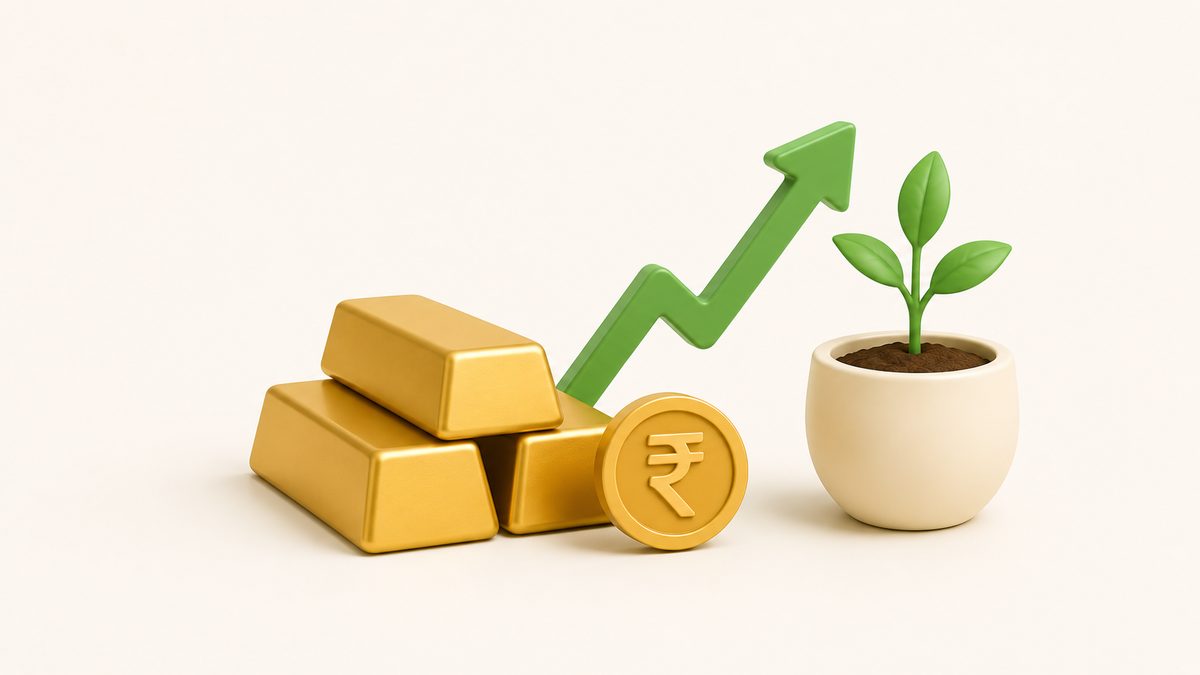
Gold, fixed deposits and the stock market are the three places most Indian households put their money. They behave very differently — here's how to think about each, rather than chasing whichever did best last year.
Fixed deposit — certainty
An FD gives you a known return fixed on the day you book it — typically around 6.5–7.5%, fully taxable at your slab. Your money is safe (DICGC-insured to ₹5 lakh per bank) and predictable, but it tends to just about keep pace with inflation after tax.
Gold — a hedge, not an engine
Gold protects purchasing power and tends to shine in uncertain times, but it generates no income and its returns come in bursts. It's best as a portion of a portfolio (often 5–15%), not the whole thing.
Nifty 50 — long-run growth, with volatility
Equity (via a Nifty 50 index fund) has historically delivered the highest long-run returns of the three, but with real ups and downs along the way. It rewards patience and a long horizon — and it's where serious wealth-building usually happens.
Compare them on your own amount and horizon — and remember past performance never guarantees the future.
Where to go next
FAQs
Over long periods, equity (the Nifty 50) has historically delivered the highest returns, followed by gold, with FDs lowest but safest. Returns vary by period and the past doesn't guarantee the future — each serves a different purpose.
Gold preserves purchasing power and hedges uncertainty, but it earns no income and its returns are uneven. It works best as a small slice of a diversified portfolio rather than your main growth investment.
After tax, FD returns often only roughly match inflation, so FDs preserve money rather than grow it meaningfully. They're ideal for safety and money you'll need soon, not for long-term wealth building.
Educational information, not financial advice. Figures are illustrative and assume the stated return or rate; actual outcomes vary and aren't guaranteed. Run your own numbers before deciding.