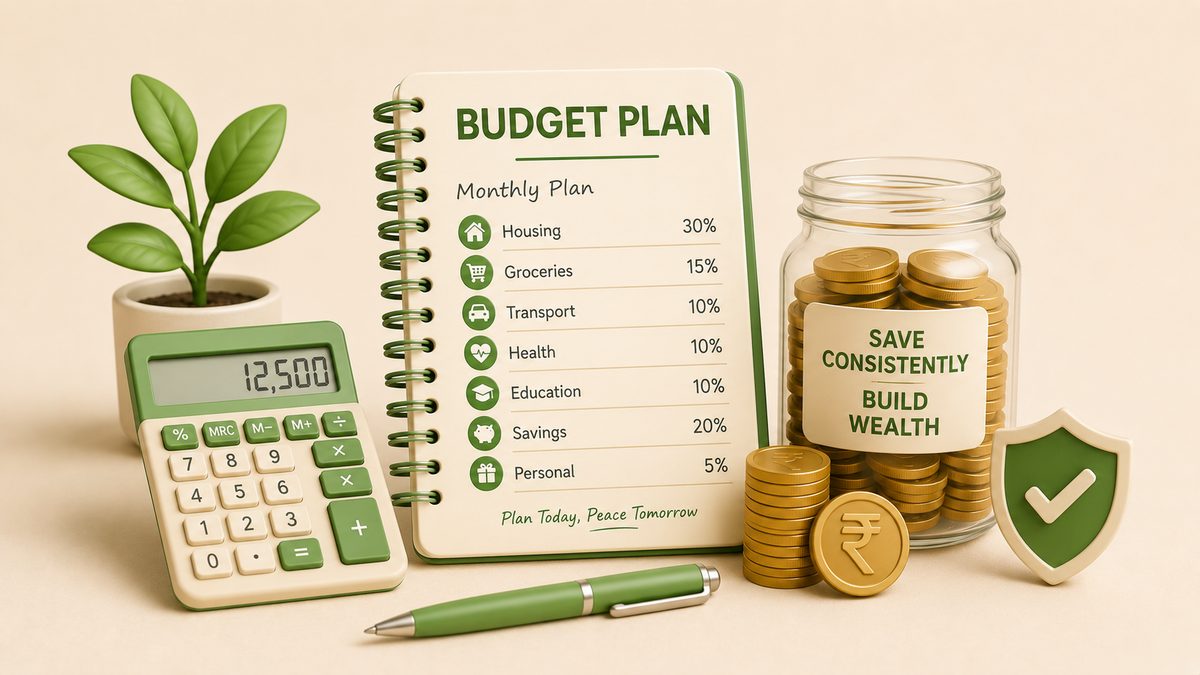
Early in your wealth journey, how much you save matters far more than what return you earn. A simple budgeting rule makes it manageable.
The 50/30/20 rule
- 50% of take-home pay on needs — rent, food, EMIs, utilities, insurance
- 30% on wants — eating out, travel, subscriptions, shopping
- 20% on savings & investments — SIPs, emergency fund, goals
Twenty percent is the target floor for saving, not a ceiling. If you can save more — especially when you're young or your income jumps — do it; lifestyle creep is what quietly eats raises.
Automate it so it actually happens
Set up your SIPs and recurring transfers for the day after payday, so saving happens before spending. What's left is your guilt-free spending money. 'Pay yourself first' beats trying to save whatever's left at month-end (which is usually nothing).
See what your savings rate becomes over time in the SIP calculator.
Where to go next
FAQs
It splits your take-home pay into 50% for needs, 30% for wants and 20% for savings and investments. It's a simple starting framework — adjust the ratios to your situation, treating 20% as a minimum savings target.
Twenty percent is a solid baseline, but more is better — especially early in your career when compounding has the longest to work. If you can save 30–40%, you'll reach goals like retirement much sooner.
Educational information, not financial advice. Figures are illustrative and assume the stated return or rate; actual outcomes vary and aren't guaranteed. Run your own numbers before deciding.